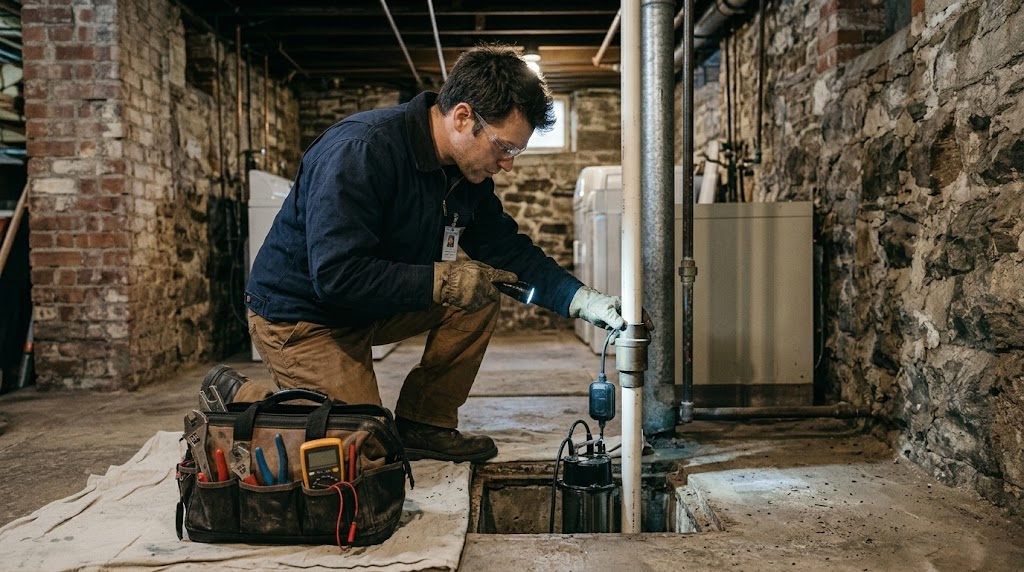
Why Oakwood Basements Depend on Reliable Sump Pumps
Oakwood occupies a distinctive geographic position on the South Shore of Staten Island. With residential streets descending toward the tidal marshlands of Oakwood Beach, Great Kills Harbor, and Lower New York Bay, the subterranean water table sits exceptionally close to residential foundation footings. During heavy Atlantic rainfalls, prolonged nor'easters, or rapid snowmelts, hydrostatic pressure builds rapidly beneath concrete basement slabs, forcing groundwater upward through cold joints and perimeter foundation seams.
A robust, properly sized sump pump system serves as the primary barrier between this high subterranean moisture and your finished basement, mechanical room, or critical heating equipment. When a primary pump experiences electrical motor burnout, float switch hang-ups, or clogged intake screens, water can flood a basement within hours, causing devastating water damage to boilers, water heaters, and structural framing.
Whether you need prompt diagnosis for a pump making humming noises without moving water or need to reinforce your home with a commercial-grade dual-pump system, our experienced Staten Island technicians deliver targeted mechanical solutions built specifically for East Shore hydrology.
Common Sump Pump Failures in Staten Island Properties
Stuck Float Switches
Vibrations shift the pump against pit walls, pinning mechanical float switches down so the motor never starts, or jamming them open until the motor burns out.
Defective Check Valves
A cracked or failed rubber flapper allows thousands of gallons of pumped water to fall back into the pit, causing relentless short-cycling and motor failure.
Storm Power Outages
Severe coastal storms that bring high water tables frequently knock out overhead electrical lines. A standard pump without battery backup is disabled immediately.
Discharge Line Blockages
Improperly pitched or frozen exterior discharge pipes build dead-end pressure, causing circuit breakers to trip or plastic housings to rupture under stress.
Undersized Horsepower
Cheap 1/4 HP builder pumps with plastic impellers cannot keep pace with rapid groundwater influx during prolonged tropical storms or tidal surges.
Municipal Sewer Surges
Sump pumps cannot prevent municipal sewer mains from pushing back into fixtures without a dedicated mechanical sewer backwater valve installed.
Backwater Valves vs. Sump Pumps: Equipment Limitations
A sump pump removes clear groundwater from weeping tile systems beneath the concrete floor. However, during flash floods, municipal storm and combined sewer mains in the street can become overloaded. Without a code-approved backwater valve installed on your private sewer connection, high-pressure storm sewage will surge directly into basement drains. While backwater valves and sump pumps provide exceptional protection against known hydrostatic risks, no mechanical device can stop water if surface flash floods overtop exterior window wells or door thresholds.
Our Professional Sump Pump Inspection Protocol
1. Basin & Pit Check
Clearing accumulated silt, gravel, and pit sediment that could choke pump impellers or foul mechanical switch travel.
2. Motor & Amp Draw
Testing electrical current draw under full head pressure to detect bearing friction, motor fatigue, or winding degradation.
3. Battery Health
Load-testing auxiliary DC batteries, cleaning terminal posts, and verifying smart charging circuits and audible alarm buzzers.
4. Discharge Line
Verifying check valve seating, testing weep relief holes, and confirming exterior discharge routes safely away from foundation walls.
Frequently Asked Questions: Sump Pumps
Oakwood and neighboring Oakwood Beach have naturally high subterranean water tables influenced by coastal proximity and wetlands. A continuously running pump may indicate hydrostatic pressure pushing groundwater into your pit, a stuck mechanical float switch caught against the pit wall, or a malfunctioning check valve allowing discharged water to drain back into the basin.
Severe coastal nor'easters and thunderstorms frequently knock out residential electric service right when flood risks peak. A secondary DC battery backup pump operates automatically from a dedicated deep-cycle marine battery when utility power fails, pumping water safely out of the basement before the pit overflows.
A sump pump evacuates clear groundwater and surface runoff that collects in a pit beneath the foundation floor. A sewer backwater valve is installed directly on your main drain line to mechanically block municipal storm-sewer surges from pushing raw sewage upward through your basement plumbing fixtures.
Sump pumps should be tested every three to four months and before major seasonal storm seasons. Pour five gallons of water into the basin to ensure the float rises freely, the motor starts promptly, water discharges rapidly without gurgling back, and the auxiliary battery charger holds full voltage.