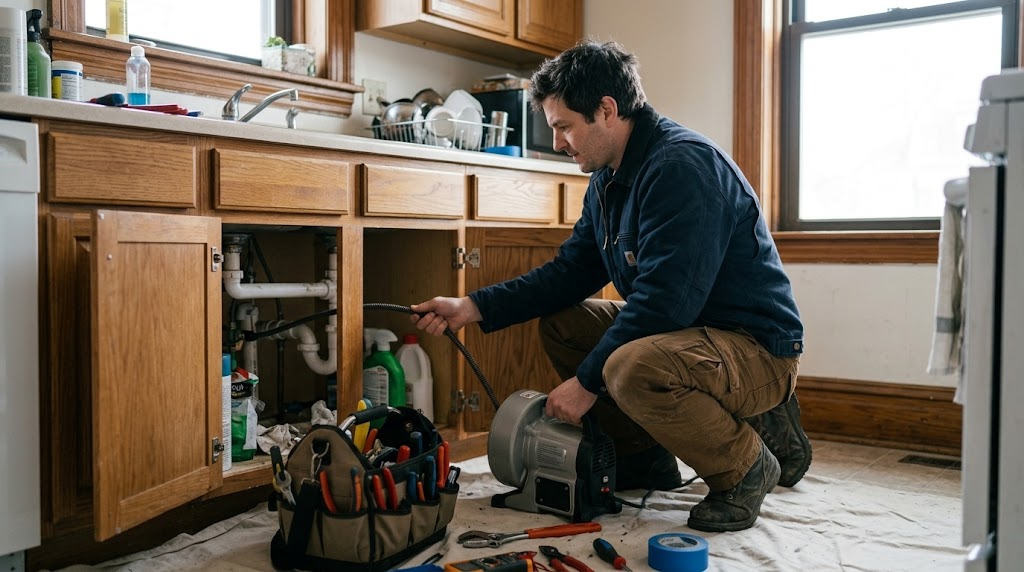
Reliable Mechanical Drain Solutions for Oakwood Homeowners
Sluggish drains and unexpected waste backups disrupt everyday life and threaten your property with contaminated water damage. In the established detached and semi-detached homes of Oakwood, Staten Island, residential drainage systems contend with decades of accumulated cooking oils, soap scum, hair binds, and hard water mineral deposits inside vintage cast-iron, galvanized steel, and copper branch lines.
Unlike temporary retail chemical drain pour-downs that corrode aged plumbing metals without eliminating dense blockages, our experienced plumbers employ commercial-grade cable augers and rotary cutters matched specifically to pipe diameter. We remove the physical obstruction completely, restoring unrestricted drainage velocity.
From a single kitchen sink trap holding water to multiple fixtures backing up into basement floor drains, we identify whether your problem is an isolated fixture issue or a developing obstruction deep inside your property's main building drain.
Single Fixture Clog vs. Main Sewer Obstruction
Localized Fixture Stoppage
When a blockage is confined to an individual fixture—such as a slow kitchen sink, a clogged bathroom lavatory, or a standing shower trap—the other plumbing fixtures throughout the house continue to drain normally.
- Common Culprits: Hair clumps in pop-up stoppers, solidified cooking oils in P-traps, or small dropped items.
- Targeted Remedy: Manual trap disassembly, targeted branch cable snaking, and fixture sanitation.
Main Building Drain Stoppage
When the central waste stack or main building drain underneath your basement slab becomes choked, water cannot reach the street sewer. Water from upper fixtures seeks the lowest physical exit point.
- Warning Signs: Flushing a toilet causes bubbling or sewage rise in basement floor drains or laundry sinks.
- Targeted Remedy: Heavy-duty main line augering, HD camera video inspection, and high-pressure jetting.
The Hidden Hazard of Chemical Drain Cleaners
Many homeowners reach for retail liquid drain openers when sinks slow down. However, these formulas rely on concentrated sulfuric acid or sodium hydroxide that generates intense chemical heat. In older Oakwood homes with vintage cast-iron, galvanized iron, or thin brass slip-joint traps, these caustics eat through oxidized pipe walls, dissolve rubber gaskets, and create hidden pinhole leaks inside walls and ceilings. Furthermore, they rarely dissolve dense hair roots or grease plugs completely, leaving behind toxic, burning fluid that poses severe splash risks to technicians.
Advanced Drain Clearance Methods We Provide
Commercial Cable Augers
Continuous wound-steel cables fitted with specialized retrieval heads, C-cutters, and spade bits bore through dense obstructions up to 100 feet deep.
High-Pressure Hydro Jetting
Scouring pipe walls to bare metal using 4,000 PSI rotating water streams, blasting away decades of congealed kitchen grease and mineral scale.
Optical Camera Verification
Feeding self-leveling fiber-optic cameras through cleared lines to visually verify total blockage removal and inspect pipe structural health.
Frequently Asked Questions: Drain Cleaning
Liquid chemical drain cleaners use caustic sodium hydroxide or sulfuric acid that generates extreme exothermic heat. In older Oakwood homes with cast-iron or galvanized drainage pipes, these chemicals corrode pipe walls, melt PVC glue, dissolve brass slip-joint washers, and sit trapped in standing water, creating serious chemical splash hazards for plumbers who must mechanically clear the line later.
If only one kitchen sink or shower drains slowly while other fixtures run freely, the stoppage is localized within that fixture's P-trap or branch line. If running water in an upstairs sink causes water or bubbles to rise in a downstairs basement floor drain or toilet, the obstruction is located deep within your main waste stack or building sewer line.
Mechanical steel snakes punch a hole through soft blockages to restore immediate flow, but they leave hardened cooking grease, soap scum, and mineral scale clinging to pipe walls. High-pressure hydro jetting scours the entire circumference of the pipe with rotating water jets up to 4,000 PSI, restoring original pipe diameter without damaging structurally sound piping.
Kitchen drains frequently clog when fats, oils, and grease (FOG) are rinsed down the sink in warm water. As the grease reaches colder subterranean pipes beneath the basement slab, it congeals into rock-hard wax that traps coffee grounds, starch, and food particles. Scale build-up on interior cast-iron walls further accelerates grease entrapment.